 |
 |
 |
 |
 |
 |
 |
 |
 |

 |
Climate change bad news for most birds: study
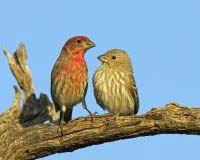
Paris (AFP) March 4, 2009 Birds in Europe are already feeling the heat from climate change, with three species suffering reduced ranges or population for every one that benefits from warming, said a study published Wednesday. Researchers found a strong match between data collected over decades from a continent-wide monitoring network and computer models forecasting the impact of global warming. "Although we have only a very small actual rise in global average temperatures, it is staggering to realise how much change we are noticing in wildlife populations," said lead author Richard Gregory of the Royal Society for the Protection of Birds in Britain. "If we don't take our foot off the gas now, our indicator shows that there will be many much worse effects to come." Any increase in Earth's average temperature above 2.0 degrees Celsius (3.6 degrees Fahrenheit) compared to pre-industrial times "will create global havoc" for birds and other wildlife, he said in a press statement. The study, published in the online journal PLoS ONE, analysed data for 122 wild bird species, more than a fifth of the 526 species known to nest in Europe. "We found that the number being negatively impacted was nearly three times greater than that benefit from climate change," said co-author Frederic Jiguet, a research at France's National Museum of Natural History. The researchers created the first continent-wide indicator of climate change impact on wildlife. "Our indicator is the biodiversity equivalent of the FTSE stock exchange, only instead of summarising the changing fortunes of businesses, it summarises how biodiversity is changing due to climate change," said Stephen Willis of Durham University. Birds that were predicted to fare well under global warming have expanded their habitats, and those predicted to have done badly declined over the last two decades, he said. The species that have thrived due to climate change include bee-eater, cirl bunting, hoopoe, golden oriole, goldfinch, collared dove, and four species of warbler: Cetti's, great reed, Sardinian and subalpine. Those hit hardest by rising temperatures include snipe, meadow pipit, brambling, willow tit, lapwing, thrush nightingale, wood warbler, nutcracker, northern wheatear, and lesser spotted woodpecker. Related Links Darwin Today At TerraDaily.com
 Faced with possible EU ban, Canada defends seal hunting
 Ottawa (AFP) March 2, 2009
The government of Canada on Monday defended the "humaneness" of seal-hunting and rejected efforts to outlaw the practice, after a European Parliament committee voted to ban the import of seal products. |
|
|

| The content herein, unless otherwise known to be public domain, are Copyright Space.TV Corporation. AFP and UPI Wire Stories are copyright Agence France-Presse and United Press International. ESA Portal Reports are copyright European Space Agency. All NASA sourced material is public domain. Additional copyrights may apply in whole or part to other bona fide parties. Advertising does not imply endorsement, agreement or approval of any opinions, statements or information provided by Space.TV Corp on any Web page published or hosted by Space.TV Corp. Privacy Statement |