 |
 |
 |
 |
 |
 |
 |
 |
 |

 |
COROT Sees First Light
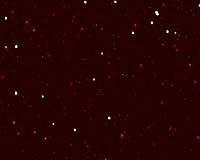
Paris, France (ESA) Jan 25, 2007 In the night between 17 and 18 January 2007, the protective cover of the COROT telescope has been successfully opened, and COROT has seen for the first time light coming from stars. Surveying vast stellar fields to learn about star interiors and to search for extra-solar planets is the goal of this unique mission, whose scientific observations will officially start at the beginning of February this year. The first light detected by COROT comes from the constellation of the Unicorn near Orion, the great 'hunter' whose imposing silhouette stands out in the winter nights. This nice image, taken during the in-orbit calibration exercise, shows that the quality of this preliminary data is basically as good as the computer simulations. "This is an excellent piece of news," commented Malcolm Fridlund, ESA Project Scientist for COROT. On 18 January, the telescope was carefully aligned with the region to be observed, facing away from the centre of our Galaxy. This setting that will be maintained until April, when the Sun's rays will start to interfere with the observations. COROT will then rotate by 180 degrees and will start observing the opposite region towards the centre of the Milky Way. In the meantime the COROT scientists are preparing for the science phase to start in February, continuing a thorough examination of the data and the information collected so far. COROT was set in space by a Soyuz rocket after a text-book launch from the Baikonur cosmodrome in Kazakhstan on 27 December 2006. Settled in its almost-circular polar orbit ranging between 895 and 906 kilometres altitude over the Earth's surface, the spacecraft was powered on 2 January 2007, and has begun its calibration exercise, still on going. Major steps of this testing phase have been the test of the COROT four thrusters's nozzles, necessary to precisely orient the spacecraft in space, and the calibration of the light sensors. The sensor calibration process, which paradoxally must take place in total darkness, is designed to check the detector arrays pixel by pixel. For a given amount of light, a pixel doesn't generate exactly the same amount of current as its neighbours, so these individual responses must be taken into account when applying corrections to the scientific data to come. COROT is a CNES project with ESA participation. The other major partners in this mission are Austria, Belgium, Brazil, Germany and Spain. Related Links COROT Stellar Chemistry, The Universe And All Within It Space Telescope News and Technology at Skynightly.com
 James Webb Space Telescope Mirror Backplane Prototype Passes NASA Space Readiness Tests
 Redondo Beach CA (SPX) Jan 18, 2007
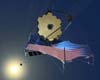
A prototype structure that holds the primary mirrors for the optical element of the James Webb Space Telescope (JWST) passed a key readiness milestone after undergoing a series of rigorous cryogenic tests at NASA's Marshall Space Flight Center in Huntsville, Ala. Northrop Grumman is the prime contractor for JWST, leading a team in the design and development under contract to NASA Goddard Space Flight Center. |
|
|

| The content herein, unless otherwise known to be public domain, are Copyright Space.TV Corporation. AFP and UPI Wire Stories are copyright Agence France-Presse and United Press International. ESA Portal Reports are copyright European Space Agency. All NASA sourced material is public domain. Additional copyrights may apply in whole or part to other bona fide parties. Advertising does not imply endorsement, agreement or approval of any opinions, statements or information provided by Space.TV Corp on any Web page published or hosted by Space.TV Corp. Privacy Statement |