GPS DAILY TERRA DAILY SPACE DAILY SPACE WAR MARS DAILY SPACE TRAVEL ABC SOLAR ENERGY DAILY
  GPS News  
Get Our Free Newsletters Via Email
  
Search All Our Sites at SpaceBank
Russia And India Sign Agreements On Glonass Navigation System

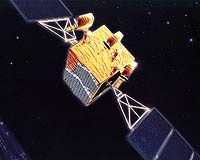
File image of Glonass class satellite.
by Staff Writers
New Delhi (RIA Novosti) Jan 25, 2007
Russia and India signed two cooperation agreements Thursday on Russia's global space navigation system Glonass, which will be used by Moscow's long-time partner in the military-technical sector. Glonass, a Russian version of the U.S. Global Positioning System (GPS), is designed for both military and civilian purposes, and allows users to identify their positions in real time. It can also be used in geological prospecting.

The agreements were signed by the head of Russia's Federal Space Agency, Anatoly Perminov, and Madhavan Nair, chairman of the Indian Space Research Organization (ISRO), with President Vladimir Putin and Indian Prime Minister Manmohan Singh in attendance.

Perminov earlier said Russia and India plan to jointly use Glonass.

Russian Defense Minister Sergei Ivanov, who is also currently in India, said Tuesday that Moscow and New Delhi had agreed to launch Glonass-M satellites with the help of Indian booster rockets, and to create new-generation navigation satellites.

In December 2005, President Vladimir Putin ordered that the system be ready by 2008, and Ivanov said Glonass would be available to domestic users for military as well civilian purposes by the end of 2007.

Perminov said earlier that Russia is also in talks with the United States and the European Space Agency to prepare agreements on the use of Glonass jointly with the GPS and Galileo satellite navigation systems.

The agency plans to have 18 satellites in orbit by late 2007 or early 2008, and a full orbital group of 24 satellites by the end of 2009, he said.

Ivanov, who is also a deputy prime minister, said late last year that Russia will lift all precision restrictions on Glonass beginning in 2007, which will enable accurate and unlimited commercial use of the military-controlled global positioning system.

Current restrictions limit the accuracy for civilian users of Glonass to 30 meters.

The first launch under the Glonass program took place October 12, 1982, but the system was only formally launched September 24, 1993.

Andrei Kozlov, the head of the Reshetnev Research and Production Center in the Siberian city of Krasnoyarsk, Russia's leading spacecraft manufacturer, said earlier the Glonass system currently has 13 satellites in orbit.

The satellites currently in use are of two modifications - Glonass and its updated version Glonass-M. Glonass-M has a longer service life of seven years and is equipped with updated antenna feeder systems and an additional navigation frequency for civilian users.

A future modification, Glonass-K, is an entirely new model based on a non-pressurized platform, standardized to the specifications of the previous models' platform, Express-1000.

Glonass-Ks' estimated service life has been increased to 10-12 years, and a third "civilian" L-range frequency has been added.

Tests on Glonass-K satellites are scheduled for 2007.

Source: RIA Novosti

Related Links
GPS Applications, Technology and Suppliers
Military Space News at SpaceWar.com

South Korea's Port Of Busan To Use Savi Networks SaviTrak

Mountain View CA (SPX) Jan 26, 2007
Savi Networks has announced that it has extended the SaviTrak real-time information service to key terminal locations at the Port of Busan, South Korea. As one of the highest-volume shipping hubs for the Asia Pacific region, the Port of Busan is the fourth largest trading partner with the United States by container volume.


Memory Foam Mattress Review

Newsletters :: SpaceDaily Express :: SpaceWar Express :: TerraDaily Express :: Energy Daily
XML Feeds :: Space News :: Earth News :: War News :: Solar Energy News
  • Bats In Flight Reveal Unexpected Aerodynamics
  • Lockheed Martin And Boeing Form Strategic Alliance To Promote Next-Gen Air Transportation System
  • Time to test the Guardian Missile Defense System For Commercial Aircraft
  • Operational Testing And Evaluation Of Guardian Commercial Airline Anti-Missile System Begins

  • Multimedia Car Radio Of The Future
  • DLR Uses Existing Television Satellites For Wireless Reception In Cars
  • Split Over CO2 Limits For New Cars As EU Postpones Decision
  • Chinese Carmakers Head West

  • Northrop Grumman Integrates All Phased Array Antennas On First Advanced EHF Flight Payload
  • Alcatel Wins Italian Military Communications Satellite Deal
  • Boeing And US Air Force Demonstrate Advanced Airborne Networking First
  • Northrop Grumman Awarded Contract To Implement More Efficient Way to Support B-2 Bomber

  • No Need For Rushed Response To US Radar Plans In Europe Says Ivanov
  • Czech Security Council Clears Anti-Missile Base Talks With US
  • US To Start Talks On Eastern Europe Missile Defence System
  • China Encourages World-Wide Ballistic Missile Proliferation By Its Actions Says ABM Lobby

  • British Food Retailers Carving Out Green Future
  • Conservationists Meet To Avert Feared Tuna Extinction
  • Escapes From Norway's Fish Farms Threaten Wild Salmon
  • California Fruit Crops Devastated By Freeze Says Schwarzenegger

  • Mud Volcano In Java May Continue To Erupt For Months And Possibly Years
  • FTMSC Signs Partnership With Telecoms Sans Frontieres
  • Indonesian Mud Volcano Caused By Drilling
  • Indonesian Mud Volcano Is Probably A Natural Event

  • Northrop Grumman Supplies TouchTable Technology to CNN's 'The Situation Room'
  • Raytheon Awarded Contract for Early Warning Radars Sustainment
  • New Approaches For Producing Large Composite Structures
  • LISA Pathfinder Spacecraft Test Phase About To Start

  • Singapore Launches Contest To Build 'Urban Warrior' Robots
  • First Soft-Bodied Robots Planned
  • Conceptualizing A Cyborg
  • Hunt On For Next World-Changing Gadget At US Electronics Show

  • The content herein, unless otherwise known to be public domain, are Copyright 1995-2006 - SpaceDaily.AFP and UPI Wire Stories are copyright Agence France-Presse and United Press International. ESA PortalReports are copyright European Space Agency. All NASA sourced material is public domain. Additionalcopyrights may apply in whole or part to other bona fide parties. Advertising does not imply endorsement,agreement or approval of any opinions, statements or information provided by SpaceDaily on any Web page published or hosted by SpaceDaily. Privacy Statement