 |
 |
 |
 |
 |
 |
 |
 |
 |

 |
Outside View: Problems with GLONASS
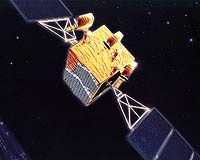
Moscow, April 9, 2008 The council of chief designers responsible for commissioning Russia's Global Navigation Satellite System has said it will only become operational in late 2008, whereas the previous deadline was Dec. 31, 2007. Something is obviously amiss in this ambitious project, the Russian equivalent of the U.S. Navstar Global Positioning System. According to the Russian Space Agency -- Roskosmos -- only 16 GLONASS satellites are in orbit. However, the system requires 18 satellites to cover Russia; and 24 dependable satellites operating round the clock are needed for accurate global navigation. By comparison, some 30 operational Navstar GPS satellites are now circling the Earth. Although Russia can also launch the required number of satellites, the entire GLONASS cluster will not be equally effective as GPS satellites, and will not match their standards in the near future. For no apparent reason, Russia once again wants to convince the world of its all-round technical prowess. Although Moscow does not have to accomplish this objective, its will provide its armed forces with an independent navigation-satellite network. However, it would be a waste of money and material to try and facilitate the commercial success of the GLONASS on domestic and global markets. There are no serious surveys proving that a full-fledged domestic navigation-satellite market has emerged. Moreover, the Russian defense industry will hardly be able to manufacture enough GLONASS transceivers for the population of at least major cities in the foreseeable future. The GLONASS system's quality and capabilities also leave a lot to be desired. In late March, Russian First Deputy Prime Minister Sergei Ivanov said there were no plans to make the system a better system than the GPS. It is therefore unclear why Russia should manufacture GPS-compatible transceivers that cost more, emit less clear signals and are less accurate than their U.S. equivalents. Even if Russia starts producing GPS-compatible transceivers, it has no chance of defeating Navstar GPS, which has dominated the world market for almost 20 years. Maybe it is worthwhile emulating the experience of Russian automakers? Instead of unsuccessfully trying to promote their own models, they are now imitating the highest standards of the international automotive industry, which is economically expedient and does not hurt our national pride. At the same time, they are quite successful at manufacturing wheeled and tracked vehicles for the military. (Andrei Kilsyakov is a political correspondent for the RIA Novosti news agency. This article is reprinted by permission of the RIA Novosti news agency. The opinions expressed in this article are the author's and do not necessarily represent those of the RIA Novosti news agency.). (United Press International's "Outside View" commentaries are written by outside contributors who specialize in a variety of important issues. The views expressed do not necessarily reflect those of United Press International. In the interests of creating an open forum, original submissions are invited.) Related Links GPS Applications, Technology and Suppliers
 NAVTEQ Global LBS Challenge - US Winners Announced
 Las Vegas NV (SPX) Apr 09, 2008
NAVTEQ has announced during an awards ceremony at CTIA WIRELESS 2008 that Ten 23 is the Grand Prize Winner of this year's NAVTEQ Global LBS Challenge -- Americas. As the Grand Prize Winner, Ten 23 received a prize package valued at $525,000, including $50,000 in cash, $225,000 in NAVTEQ data licenses and up to $250,000 in sponsor-donated licenses. |
|
|

| The content herein, unless otherwise known to be public domain, are Copyright Space.TV Corporation. AFP and UPI Wire Stories are copyright Agence France-Presse and United Press International. ESA Portal Reports are copyright European Space Agency. All NASA sourced material is public domain. Additional copyrights may apply in whole or part to other bona fide parties. Advertising does not imply endorsement, agreement or approval of any opinions, statements or information provided by Space.TV Corp on any Web page published or hosted by Space.TV Corp. Privacy Statement |