 |
 |
 |
 |
 |
 |
 |
 |
 |

 |
Europe Moves To Safeguard Galileo Frequencies
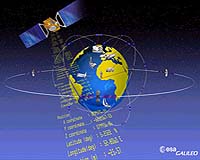
Paris (AFP) March 5, 2007 The European Space Agency said on Monday it had awarded a contract to a British satellite firm to help safeguard frequencies allotted to the Galileo satellite navigation system. Surrey Satellite Technology has been awarded the contract for preliminary work for building a satellite to permanently secure Galileo's frequencies, the Paris-based ESA said in a press release. "From now on, there will always be a European navigation satellite in space," the agency promised. Billed as a rival to the US Global Positioning System (GPS), the Galileo scheme calls for the deployment of around 30 satellites in orbit, operational commercially from 2010. To claim the frequencies for this network, ESA sent up a first satellite, GIOVE-A, which started emitting test calibration signals on January 12 2006. A second satellite, GIOVE-B, was due to have been hoisted aloft in early 2006, but the operation has twice been postponed because of technical problems and is now pencilled in for late 2007. Under the rules of the International Telecommunications Union (ITU), an operator risks losing frequency rights if a break in service lasts longer than two years. Thus, if GIOVE-A breaks down or GIOVE-B's problems continue, the new satellite, called GIOVE-A2, can serve as a backup. GIOVE-A2 will be ready for launch in the second half of 2008, ESA said, adding that the date would be determined by the state of GIOVE-A and GIOVE-B. The satellite, estimated to be worth 25 to 30 million euros (35 to 40 million dollars), will be based on the design of GIOVE-A, which was also built by Surrey Satellite Technology Ltd. ESA has contracts to launch and test Galileo's experimental satellites and also to provide the first four of the 30 commercial satellites. Galileo is being promoted as being more accurate than GPS, giving mariners, pilots, drivers and others an almost pinpoint-accurate navigational tool. Unlike GPS, Galileo will stay under civilian control, increasing the European Union's strategic independence. The project has hit other hitches. A contract for ceding operation of Galileo to an eight-member private consortium has still to be signed, and the EU has yet to decide where its overseer, a public body called the Galileo Supervisory Authority, will be sited.
Source: Agence France-Presse Related Links GPS Applications, Technology and Suppliers GPS Applications, Technology and Suppliers
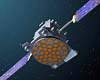
 GIOVE-A Navigation Signal Available To Users
 Paris, France (ESA) Mar 05, 2007
The GIOVE-A Signal-in-Space Interface Control Document, the document that gives the technical details of the signals transmitted by the GIOVE-A satellite, has been released. This will allow receiver manufacturers and research institutions to use a real signal for their research and development. |
|
|

| The content herein, unless otherwise known to be public domain, are Copyright Space.TV Corporation. AFP and UPI Wire Stories are copyright Agence France-Presse and United Press International. ESA Portal Reports are copyright European Space Agency. All NASA sourced material is public domain. Additional copyrights may apply in whole or part to other bona fide parties. Advertising does not imply endorsement, agreement or approval of any opinions, statements or information provided by Space.TV Corp on any Web page published or hosted by Space.TV Corp. Privacy Statement |